
Dangote Petroleum Refinery has announced a new ex-depot petrol price of ₦739 per litre, marking another adjustment in the domestic fuel market as stakeholders continue to navigate the realities of deregulation, exchange rate pressures, and rising operational costs. Reports by Punch and other Nigerian news outlets indicate that the price review reflects prevailing market conditions and ongoing changes in Nigeria’s downstream petroleum sector.
According to industry sources, the new price applies to petrol supplied directly from the Dangote Refinery and is expected to influence pump prices across the country, depending on logistics, distribution margins, and retailer pricing strategies. The adjustment comes amid sustained volatility in global oil prices and fluctuations in the foreign exchange market, both of which play a significant role in determining domestic fuel costs.
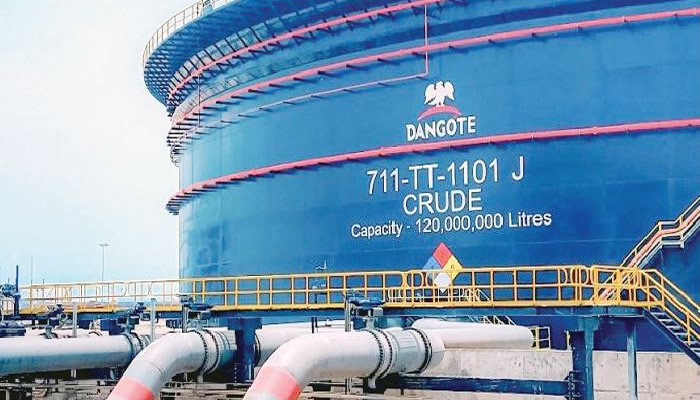
Market analysts explained that the refinery’s pricing decision is closely linked to the cost of crude oil feedstock, much of which is priced in dollars, as well as expenses related to refining, transportation, and financing. Despite the commencement of local refining operations, the sector remains exposed to exchange rate movements, given the structure of Nigeria’s oil and gas industry and the broader macroeconomic environment.
Reports indicated that the announcement has triggered mixed reactions among marketers and consumers. While some industry players welcomed the clarity provided by a fixed ex-depot price from a local refinery, others expressed concern about the impact of higher fuel costs on transportation, goods pricing, and household expenses already strained by inflation.
Petroleum marketers noted that although local refining was expected to moderate fuel prices over time, immediate reductions are constrained by several factors, including crude supply arrangements, distribution costs, and infrastructure limitations. They explained that the transition from import dependence to domestic refining is gradual and may not immediately translate into significantly lower pump prices.
The new petrol price comes against the backdrop of the Federal Government’s removal of fuel subsidies, which has allowed market forces to play a larger role in price determination. Since the subsidy removal, petrol prices have experienced frequent adjustments, reflecting changes in crude oil prices, exchange rates, and supply dynamics.
Economic analysts observed that the ₦739 per litre price underscores the challenges facing the Nigerian economy as it adjusts to market-based pricing mechanisms. Fuel costs have a direct impact on transportation fares, food prices, and overall inflation, making petrol pricing a sensitive issue for policymakers and the public.
Reports also highlighted that the Dangote Refinery has continued to ramp up operations and expand product distribution since commencing fuel supply to the domestic market. Industry stakeholders believe that as production volumes increase and supply chains become more efficient, the refinery could play a stabilising role in the fuel market over the medium to long term.
The refinery’s management has previously emphasised its commitment to supporting Nigeria’s energy security by reducing reliance on imported petroleum products. By refining crude locally, the facility is expected to conserve foreign exchange, create jobs, and strengthen the downstream sector. However, experts caution that these benefits may take time to fully materialise.
Transport operators and commercial drivers, reacting to the new price, expressed concerns about potential increases in transport fares. They noted that fuel accounts for a significant portion of operating costs and warned that higher pump prices could lead to fare adjustments, further affecting commuters and businesses.
Consumer groups also raised concerns about the broader cost-of-living implications. With food inflation and transportation costs already high, they warned that any increase in fuel prices could exacerbate economic hardship for households. They called on the government to accelerate complementary measures, such as improved public transportation and targeted social interventions, to cushion the impact on vulnerable groups.
On the policy front, reports indicated that government officials continue to emphasise the long-term benefits of deregulation and local refining. They argue that while short-term price volatility is inevitable, a competitive and efficient downstream sector will ultimately lead to better supply stability and pricing transparency.
Energy sector experts noted that the announcement of a specific ex-depot price by the Dangote Refinery provides an important reference point for the market. They said this could enhance price discovery and reduce uncertainty, particularly for marketers planning supply and distribution strategies.
Despite concerns, some analysts remain cautiously optimistic. They believe that as more local refineries come on stream and competition intensifies, pricing pressures could ease. In addition, improved crude oil production and more stable foreign exchange conditions could help moderate fuel prices over time.
Reports further indicated that discussions are ongoing between stakeholders on improving logistics and distribution infrastructure to reduce costs. Efficient transportation of refined products, analysts said, is critical to ensuring that savings from local refining are passed on to consumers.
The announcement also renewed debates around the role of government in cushioning fuel price shocks. While subsidy removal has reduced fiscal burdens, critics argue that targeted interventions may still be necessary to protect low-income households from the ripple effects of fuel price increases.
As the new price takes effect, attention is expected to focus on how marketers adjust pump prices nationwide and how consumers respond. Observers note that petrol pricing will remain a key issue shaping public discourse and economic sentiment in the coming months.
In summary, the declaration of ₦739 per litre as the new petrol price by the Dangote Refinery reflects ongoing adjustments in Nigeria’s deregulated fuel market. While local refining offers long-term promise, current pricing dynamics highlight the complex interplay of global oil markets, exchange rates, and domestic economic realities, leaving consumers and businesses to brace for continued volatility in the short term.
Support InfoStride News' Credible Journalism: Only credible journalism can guarantee a fair, accountable and transparent society, including democracy and government. It involves a lot of efforts and money. We need your support. Click here to Donate