
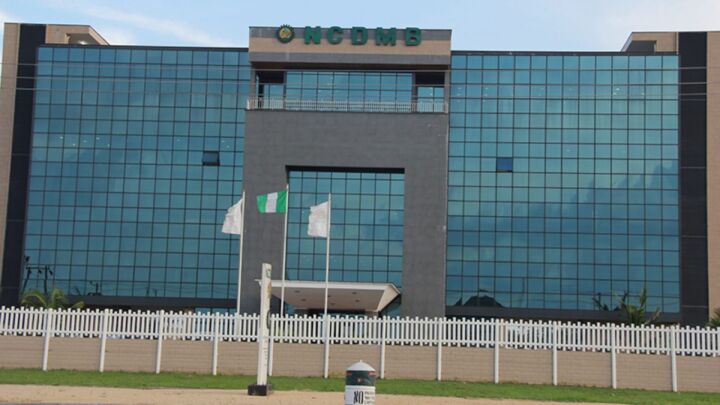
No fewer than 132 Nigerian companies have accessed a combined N51.7 billion and $359 million in funding through local content intervention schemes coordinated by the Nigerian Content Development and Monitoring Board, highlighting sustained efforts to deepen indigenous participation in the oil and gas industry. Reports by Punch and other Nigerian news outlets indicate that the funds were disbursed under various financing initiatives designed to support capacity building, project execution, and long-term growth of Nigerian-owned firms.
According to information released by the NCDMB, the funding was provided through structured local content financing programmes established in partnership with financial institutions. The intervention aims to address one of the most persistent challenges facing indigenous oil and gas companies—limited access to affordable financing—by providing capital on more favourable terms than conventional commercial loans.
The board explained that the funds were deployed across multiple segments of the oil and gas value chain, including upstream services, fabrication, logistics, engineering, and manufacturing. Beneficiary companies reportedly used the financing to acquire equipment, expand facilities, execute contracts, and improve technical capacity, thereby reducing reliance on foreign service providers.
Reports indicate that the financing support forms part of the NCDMB’s broader mandate to implement the Nigerian Oil and Gas Industry Content Development Act, which seeks to increase Nigerian participation in the sector. By improving access to capital, the board aims to ensure that local firms are better positioned to compete for major industry contracts and deliver projects efficiently.
Officials of the board were quoted as saying that the intervention funds have contributed significantly to job creation and skills development within the industry. Many of the supported projects reportedly employed Nigerian engineers, technicians, and artisans, helping to retain value within the domestic economy and reduce capital flight associated with foreign-dominated service delivery.
The funding programmes are said to include the Nigerian Content Intervention Fund and other targeted financing schemes established in collaboration with the Bank of Industry and selected commercial banks. These arrangements allow eligible companies to access long-term financing at relatively lower interest rates, with repayment structures aligned to project cash flows.
Industry stakeholders have welcomed the development, describing it as a major boost for indigenous operators who often struggle to raise capital due to high interest rates and stringent collateral requirements. Analysts noted that improved access to finance has been critical to the emergence of stronger Nigerian companies capable of executing complex oil and gas projects.
Reports further indicated that the NCDMB has maintained strict eligibility and monitoring criteria to ensure that the funds are utilised for their intended purposes. Beneficiary companies are reportedly required to demonstrate compliance with local content requirements and provide regular updates on project implementation and financial performance.
The board stated that the success of the financing schemes reflects growing confidence among financial institutions in the Nigerian oil and gas services sector. By sharing risks and providing guarantees in some cases, the NCDMB has helped de-risk lending to indigenous firms, encouraging banks to support local content objectives.
Economic analysts observed that the disbursement of over N51.7 billion and $359 million underscores the scale of investment required to sustain local participation in the energy sector. They noted that indigenous companies now play a more prominent role in areas such as fabrication, pipeline construction, and marine logistics, which were previously dominated by foreign firms.
The intervention is also seen as supporting Nigeria’s broader economic diversification agenda by strengthening domestic industrial capacity. Local manufacturing of oil and gas equipment and components, supported by the financing schemes, has reduced import dependence and contributed to foreign exchange savings.
Reports highlighted that despite the progress, challenges remain for indigenous firms, including exposure to foreign exchange volatility, delayed payments from operators, and rising operating costs. Stakeholders have called for continued expansion of local content financing programmes to sustain momentum and support more companies.
The NCDMB acknowledged these challenges and reaffirmed its commitment to scaling up intervention funding in line with industry needs. The board said it is exploring additional partnerships and innovative financing models to expand access to capital and support emerging indigenous players.
Industry experts noted that sustained funding support would be particularly important as Nigeria pursues increased oil and gas production and gas-based industrialisation. Indigenous firms are expected to play a central role in achieving these goals, making access to finance a strategic priority.
Reports also indicated that the board is placing greater emphasis on value retention, ensuring that funded projects translate into tangible economic benefits such as job creation, skills transfer, and technology development. This approach, analysts said, strengthens the long-term impact of local content policies beyond short-term contract execution.
As Nigeria continues efforts to reposition its oil and gas industry amid global energy transitions, the strengthening of indigenous capacity remains a key policy objective. Stakeholders believe that access to affordable financing will be critical in enabling local companies to adapt, innovate, and remain competitive.
In summary, the securing of N51.7 billion and $359 million in local content funds by 132 Nigerian firms reflects significant progress in deepening indigenous participation in the oil and gas sector. Through sustained financing support and effective oversight, the NCDMB aims to build a more resilient, competitive, and locally driven energy industry that delivers lasting economic benefits for the country.
Support InfoStride News' Credible Journalism: Only credible journalism can guarantee a fair, accountable and transparent society, including democracy and government. It involves a lot of efforts and money. We need your support. Click here to Donate