
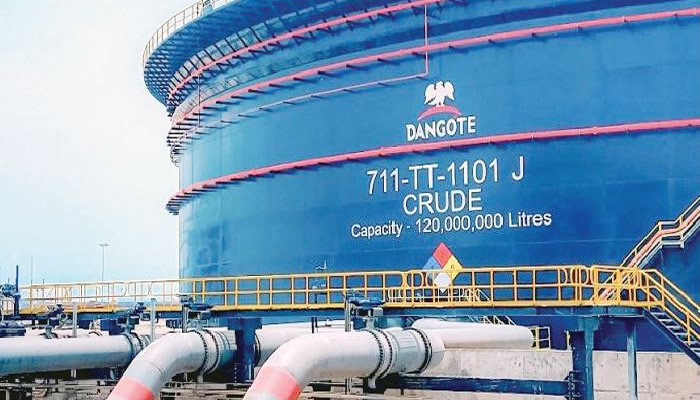
The Dangote Petroleum Refinery has committed to supplying 1.5 billion litres of petrol every month as part of efforts to stabilise Nigeria’s fuel market, reduce dependence on imports and ensure consistent nationwide availability. The pledge marks a major milestone in the refinery’s operational rollout and signals its intention to play a central role in reshaping the country’s energy landscape. With Nigeria historically reliant on imported fuel despite being a leading crude oil producer, the refinery’s promise represents a significant shift in supply dynamics and a potential turning point for the downstream sector.
Officials of the refinery disclosed that the monthly supply commitment is part of a long-term production plan designed to guarantee steady volumes of petrol, diesel, aviation fuel and other refined products. They explained that the facility, with a nameplate capacity of 650,000 barrels per day, has reached operational levels that now allow for increased product output. The refinery aims to supply domestic marketers consistently while also meeting regional demand across West and Central Africa through export channels.
Industry observers say the pledge could dramatically reduce the shocks associated with Nigeria’s fuel supply system, which has long been plagued by vessel delays, foreign exchange shortages, global price volatility and logistical constraints. The availability of 1.5 billion litres monthly is expected to improve predictability for fuel marketers, stabilise stock levels at depots and reduce the need for emergency imports that strain government finances. For consumers, the development could translate into fewer instances of scarcity, shorter queues at filling stations and more stable pricing at the pump.
The refinery’s management emphasised that the commitment aligns with its goal of ensuring Nigeria achieves full energy security. They noted that domestic refining has always been the missing link in the country’s energy chain, and the refinery intends to close that gap by providing consistent, high-quality products that meet international standards. The company added that it is working closely with regulatory agencies, fuel marketers, distribution networks and financial institutions to ensure smooth and transparent circulation of products across the country.
Downstream marketers have welcomed the announcement, describing it as a major breakthrough for an industry that has endured years of uncertainty. They noted that a guaranteed monthly supply from a local refinery will significantly cut operational risks, especially those associated with price fluctuations in the international market. According to marketers, local availability of petrol removes the heavy dependence on import financing and reduces constant pressures on the foreign exchange market.
However, they also stressed the need for efficiency in distribution channels to ensure that the refinery’s output reaches all parts of the country. Many depot operators highlighted the importance of improved trucking logistics, better security along transport corridors, and continued investment in pipeline networks to facilitate timely delivery. They cautioned that without addressing downstream bottlenecks, the full benefit of the refinery’s output might not be realised.
Energy analysts have underscored the broader implications of the refinery’s pledge, noting that consistent production could help stabilise the naira by reducing the demand for forex used in fuel importation. They also pointed out that the refinery’s large-scale operations could eventually help Nigeria build strategic reserves, a feature that has long been lacking in the country’s energy management structure. With 1.5 billion litres monthly, the country would be better positioned to respond to shocks such as global supply disruptions, shipping challenges or sudden spikes in demand.
The refinery’s supply commitment also carries strong regional significance. With many African countries struggling with fuel affordability and access due to global price instability, the Dangote facility is expected to emerge as a major supplier for the continent. This could position Nigeria as a dominant refining hub in Africa, boosting export revenues and strengthening economic ties across regional blocs.
Despite the enthusiasm, experts maintain that Nigeria’s energy sector reforms must continue to complement the refinery’s operations. They argued that regulatory clarity, transparent pricing policies, infrastructure investment and stable foreign exchange conditions remain essential to achieving a fully efficient downstream system. They also emphasised the need for stronger oversight to prevent hoarding, profiteering or unfair trading practices that could undermine the gains of increased domestic production.
For consumers, the refinery’s commitment brings renewed hope for stability in a sector often characterised by uncertainty. Many Nigerians expressed optimism that the days of chronic scarcity, long queues and panic buying may gradually fade if the monthly supply is sustained. Others urged the government and private sector to continue investing in infrastructure so that petrol distribution becomes smoother and more efficient.
As the refinery expands operations and scales up production lines, expectations are rising for even greater volumes of refined products in the future. The company has indicated that it plans to explore additional refining technologies, deepen product diversification and strengthen export capabilities as part of its broader operational strategy.
The pledge of 1.5 billion litres monthly marks a significant step in Nigeria’s energy transition. If sustained, it could reshape the economics of fuel supply, support exchange rate stability, enhance market confidence and place the country firmly on the path toward energy self-sufficiency. For now, stakeholders across the downstream sector will be watching closely to ensure that the refinery’s promise translates into consistent, visible improvements in fuel availability nationwide.
Support InfoStride News' Credible Journalism: Only credible journalism can guarantee a fair, accountable and transparent society, including democracy and government. It involves a lot of efforts and money. We need your support. Click here to Donate