
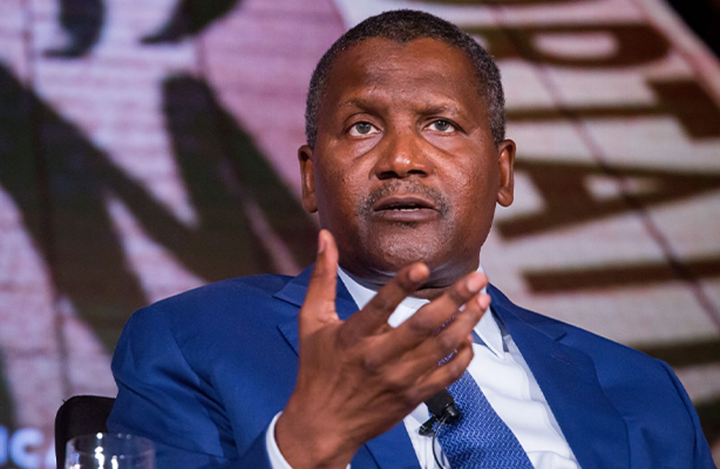
Dangote Group, one of Africa’s largest conglomerates, is on course to become the world’s top fertiliser producer by 2028, according to the company’s founder and chairman, Aliko Dangote. The announcement highlights the firm’s ambitious expansion plans in the agro-industrial sector, reflecting its commitment to transforming Africa’s agricultural landscape and boosting global food security through large-scale fertiliser production.
Speaking at a recent industry forum, Dangote emphasised that the company’s investments in fertiliser manufacturing are part of a broader strategy to strengthen Africa’s industrial base and reduce the continent’s reliance on imported agricultural inputs. The conglomerate has already made significant progress, with state-of-the-art production facilities in Nigeria and ongoing projects in other African countries aimed at increasing output and capacity.
The Dangote Fertiliser Project, a flagship initiative, is designed to produce high-quality nitrogen-based fertilisers for both local and international markets. The plant, which incorporates advanced technology and sustainable production practices, is expected to significantly increase Nigeria’s fertiliser supply and contribute to lower costs for farmers. By 2028, Dangote Group anticipates producing millions of tonnes annually, positioning itself ahead of major global players in the industry.
Industry analysts noted that Dangote’s aggressive expansion in fertiliser production comes at a critical time for Africa’s agricultural sector. The continent faces rising food demand due to population growth, and access to affordable fertilisers is essential for boosting crop yields and ensuring food security. By scaling up production, Dangote Group aims to meet this growing demand while also supporting economic development and job creation.
The company’s expansion strategy includes the construction of additional production lines, investment in logistics and distribution networks, and the establishment of partnerships with regional governments and agricultural stakeholders. These measures are expected to enhance supply chain efficiency, ensuring that fertilisers reach farmers in rural and remote areas at competitive prices. Dangote stressed that improving access to inputs is crucial for stimulating agricultural productivity and fostering sustainable farming practices.
According to Aliko Dangote, the group’s vision extends beyond production volume. The company is committed to maintaining high standards of quality, environmental sustainability, and operational efficiency. Advanced technologies in the new plants are designed to minimise energy consumption and reduce emissions, aligning the company with global sustainability benchmarks while ensuring cost-effective operations.
Economists and agribusiness experts have highlighted the potential ripple effects of Dangote’s fertiliser projects. Increased local production is expected to reduce dependence on imported fertilisers, conserve foreign exchange, and stabilise prices in the domestic market. For farmers, this translates to improved access to inputs, lower production costs, and higher potential yields, all of which can enhance livelihoods and strengthen food security across the continent.
The Dangote Group’s ambitions also have implications for regional and global markets. By positioning itself as a top global producer, the conglomerate can contribute to supply stability and address shortages in international fertiliser markets. Analysts suggest that Africa, historically a net importer of fertilisers, could become a significant exporter under Dangote’s production strategy, opening new trade opportunities and enhancing the continent’s influence in agricultural commodity markets.
Government officials have lauded Dangote’s initiative, noting its alignment with national development objectives. The project supports Nigeria’s goals of industrialisation, self-sufficiency in agricultural inputs, and job creation. It is also expected to stimulate ancillary industries, including logistics, chemical production, and manufacturing, creating a multiplier effect on the economy.
Aliko Dangote further stressed the importance of partnerships and collaboration in achieving these ambitious targets. The company is engaging with international technology providers, research institutions, and agricultural experts to ensure that its operations remain innovative, efficient, and responsive to market needs. Such collaborations are intended to drive continuous improvement in production techniques and product quality.
In conclusion, Dangote Group’s plan to become the world’s leading fertiliser producer by 2028 reflects a combination of strategic investment, technological adoption, and commitment to sustainability. By increasing production capacity, improving distribution, and supporting local farmers, the company aims not only to strengthen its position in the global market but also to contribute significantly to Africa’s agricultural transformation. With continued execution of its ambitious roadmap, Dangote Group is set to play a pivotal role in shaping the future of fertiliser production, food security, and economic development across the continent and beyond.
Support InfoStride News' Credible Journalism: Only credible journalism can guarantee a fair, accountable and transparent society, including democracy and government. It involves a lot of efforts and money. We need your support. Click here to Donate