
A disagreement between the House of Representatives and the Senate over the appropriate crude oil price benchmark has emerged as a major point of contention in the consideration of Nigeria’s 2026–2028 Medium-Term Expenditure Framework and Fiscal Strategy Paper (MTEF/FSP). The divergence has raised concerns over fiscal planning coherence as the Federal Government prepares to present the 2026 budget proposal.
The crude oil benchmark, which plays a central role in determining projected government revenue and overall expenditure, has become the focal point of debate between both chambers of the National Assembly. While the House of Representatives approved a benchmark of $64.85 per barrel for the 2026 fiscal year, the Senate opted for a lower and more conservative price of $60 per barrel, citing the need for caution amid global economic uncertainty.
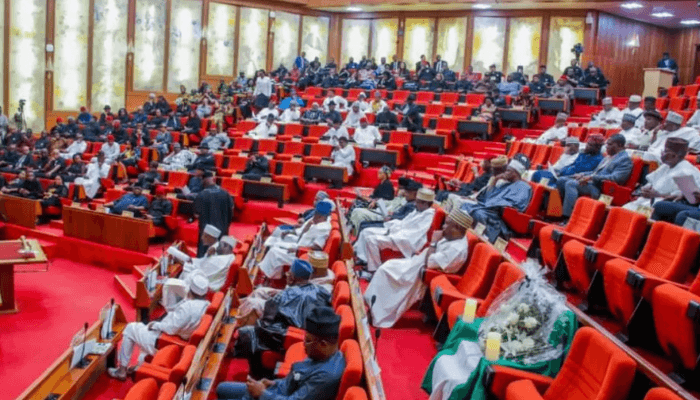
The House adopted its version of the MTEF following the presentation of a report by its joint committees on Finance, National Planning and Economic Development. Lawmakers supporting the higher benchmark argued that the figure reflects prevailing trends in the international oil market and aligns with Nigeria’s efforts to stabilise crude production and improve revenue generation. They maintained that a realistic benchmark is necessary to prevent unnecessary fiscal tightening that could undermine development spending.
According to members of the House leadership, pegging the oil price too low could result in understated revenue projections, potentially limiting funds available for capital projects and social interventions. They stressed that Nigeria’s economic recovery agenda requires adequate fiscal space to support infrastructure development, education, healthcare and security.
In contrast, the Senate’s decision to reduce the benchmark to $60 per barrel was driven by concerns over volatility in the global oil market. Senators argued that geopolitical tensions, fluctuating demand and uncertainties surrounding energy transition policies could negatively impact crude oil prices. By adopting a lower benchmark, the upper chamber said it aimed to shield the budget from possible revenue shortfalls and reduce the risk of excessive borrowing.
Despite the disagreement on oil price assumptions, both chambers aligned on several other key macroeconomic parameters contained in the MTEF. These include crude oil production estimates of 1.84 million barrels per day for 2026, rising gradually over the medium term, as well as exchange rate projections that reflect expectations of gradual stabilisation in the foreign exchange market.
The MTEF outlines a projected federal expenditure of over ₦54 trillion for the 2026 fiscal year, with retained revenue estimated at about ₦34 trillion and new borrowings projected at nearly ₦18 trillion. Debt servicing is expected to consume a significant portion of government revenue, reinforcing concerns among lawmakers and analysts about Nigeria’s growing debt burden.
The differing oil benchmarks have also sparked broader debates within the National Assembly over fiscal sustainability and transparency. Some lawmakers expressed fears that overly optimistic revenue assumptions could worsen fiscal deficits if oil prices fall below projections. Others warned that excessive conservatism could stifle economic growth and undermine the implementation of critical government programmes.
Deliberations in the House were briefly suspended earlier in the week after lawmakers raised objections over revenue projections and expenditure assumptions contained in the MTEF document. The pause reflected the intensity of internal debates and underscored the complexity of balancing fiscal realism with development needs.
Economic analysts note that the disagreement highlights deeper structural challenges in Nigeria’s fiscal planning framework, particularly its heavy dependence on oil revenue. They argue that while the oil benchmark debate is important, greater emphasis should be placed on expanding non-oil revenue sources and improving efficiency in public spending.
As required by law, both chambers are expected to harmonise their positions through a joint committee process before the MTEF can be fully adopted. The harmonisation is critical, as the framework provides the foundation upon which the annual budget is prepared and implemented.
Attention is now shifting to the formal presentation of the 2026 budget by President Bola Tinubu to a joint session of the National Assembly. The presentation is expected to trigger renewed negotiations between the House and Senate as lawmakers work to reconcile their differences and ensure a smooth budget passage.
The disagreement over the crude oil benchmark, while significant, is seen by observers as part of the broader legislative scrutiny process aimed at strengthening fiscal discipline. How quickly both chambers resolve the issue will signal the legislature’s ability to provide cohesive oversight during a period of economic adjustment and reform.
Ultimately, the outcome of the MTEF debate will shape Nigeria’s fiscal direction over the next three years, influencing government spending, borrowing levels and economic stability at a time when prudent management of public finances remains critical.
Support InfoStride News' Credible Journalism: Only credible journalism can guarantee a fair, accountable and transparent society, including democracy and government. It involves a lot of efforts and money. We need your support. Click here to Donate