
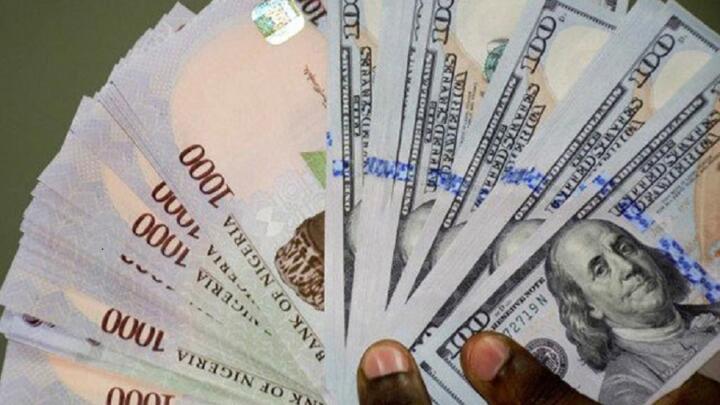
Nigeria’s currency recorded another moment of relief as the naira appreciated to 1,446.74 per dollar, buoyed by a sustained rise in capital inflows and improving investor confidence. The stronger position of the currency comes amid renewed monetary tightening, increased foreign exchange liquidity and greater oversight by financial regulators, all of which have helped create a more stable environment in recent weeks. The latest figures on foreign capital inflows, which reached $20.98 billion in the first ten months of the year, have further strengthened Nigeria’s external balance sheet and supported the upward movement of the naira.
The appreciation reflects the Central Bank of Nigeria’s increasingly aggressive policy stance designed to address market volatility and curb the destabilising impact of currency speculation. The monetary authority has pushed a series of reforms intended to enhance transparency in the FX market, improve supply through autonomous sources, and enforce compliance among financial institutions. By tightening regulations and dismantling loopholes that previously allowed arbitrage and rate distortions, the CBN has helped restore confidence and encourage more legitimate inflows into the formal market.
Foreign investors have responded positively to these measures, leading to a marked increase in portfolio investments, diaspora remittances channelled through official routes, and renewed interest from multilateral institutions. Analysts say the $20.98 billion in inflows over the ten-month period is a reflection of greater macroeconomic clarity and the perception that Nigeria may be turning the page after months of severe FX distress. While still below pre-pandemic levels, the upward trend suggests that foreign capital may continue to strengthen in the coming quarters if reform momentum is sustained.
Market observers attribute the naira’s current performance to the combination of strong inflows, better coordination between fiscal and monetary authorities, and improved export receipts. Oil production has risen modestly, helping to increase FX earnings, though concerns remain about pipeline security and the volatility of global crude prices. Non-oil exports have also seen modest gains as more manufacturers leverage the export expansion grants and government support programmes aimed at diversifying foreign-exchange sources away from crude oil.
Despite the recent gains, the currency market remains fragile, and experts caution that the recovery must be sustained through disciplined macroeconomic management. The naira’s path is still threatened by structural challenges such as a high import bill, inadequate domestic production capacity, and persistent inflationary pressures. Food inflation, driven by supply chain constraints and high logistics costs, continues to strain households and puts pressure on the overall price environment. These factors make long-term currency stability more difficult without broader economic reforms.
The improvement in foreign inflows has, however, helped ease liquidity constraints that previously strained manufacturers, importers and other businesses reliant on FX access. Many companies have reported improved availability of dollars from official windows, allowing them to meet raw material obligations and settle international commitments more efficiently. This has had a modest positive spillover on production capacity and output projections for the first quarter of next year.
Experts emphasise that the sustained appreciation of the naira depends largely on strengthening domestic production, attracting long-term investment and improving revenue generation. While portfolio investments provide immediate relief, they are often volatile and sensitive to global market conditions. To guarantee lasting stability, economists argue that Nigeria must accelerate structural reforms in sectors such as agriculture, manufacturing, energy and technology to reduce import dependence and improve export competitiveness.
The government, for its part, has pledged to intensify policies aimed at expanding the economy, strengthening fiscal discipline and promoting private-sector–driven growth. Efforts to address power shortages, modernise infrastructure and improve the ease of doing business are expected to play a central role in attracting sustainable investment. The administration has also reiterated its commitment to plugging revenue leakages, expanding the tax base and reducing reliance on borrowing.
Financial analysts note that the latest appreciation could help reduce inflationary pressure in the medium term, provided the momentum continues. A stronger naira lowers the cost of imported goods, especially for sectors heavily dependent on foreign raw materials. It could also support government efforts to stabilise fuel prices and reduce the impact of global commodity price swings.
While cautious optimism prevails, investors are closely monitoring how the Central Bank manages future policy decisions and how the government handles fiscal reforms. The upward pressure on the currency, supported by rising capital inflows and improved market discipline, suggests that Nigeria may be gradually moving toward a more stable macroeconomic footing. However, the sustainability of the gains will depend on continuous reforms, improved security, stronger governance and a coordinated policy approach that maintains investor confidence.
The current appreciation, though still a modest recovery relative to earlier highs, represents an important psychological boost for the economy and signals that ongoing reforms are beginning to produce tangible outcomes. As capital inflows continue to rise and the naira strengthens, businesses, investors and households are cautiously hopeful that the stability may signal the beginning of a long-awaited turnaround in Nigeria’s economic landscape.
Support InfoStride News' Credible Journalism: Only credible journalism can guarantee a fair, accountable and transparent society, including democracy and government. It involves a lot of efforts and money. We need your support. Click here to Donate