
The Senate Committee on Employment, Labour and Productivity has assured stakeholders that a new legal framework governing the Nigeria Social Security Trust Fund (NSSTF) will be passed soon to enhance service delivery.
The Committee Chairman, Diket Plang, gave the assurance on Monday during a public hearing convened for inputs on the proposed legislation seeking to harmonise the Nigeria Social Insurance Trust Fund (NSITF) Act and the Employees’ Compensation Act (ECA) 2010.
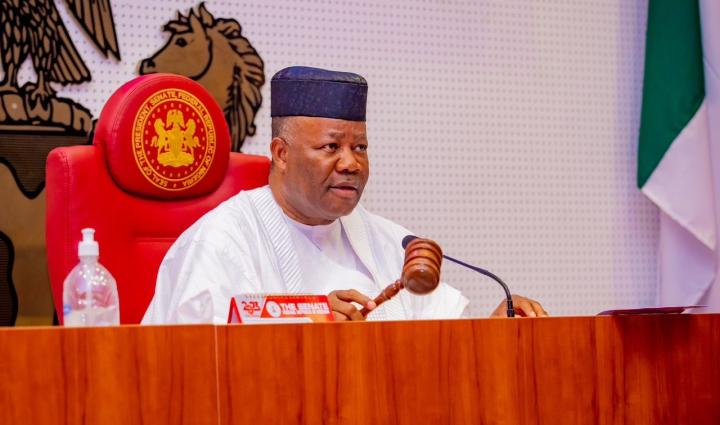
The bill sponsor, Cyril Fasuyi, said the legislation aims to expand NSITF into broader social security coverage through the merger of the 1993 NSITF Act and the ECA 2010 law.
Speaking for the Federal Government, the Minister of State for Labour and Employment, Muhammadu Maigari Dingyadi, described the move as “a beautiful idea,” but urged the Senate to strike a balance between the powers of the management and the Fund’s board to ensure broad stakeholder acceptance.
The Managing Director/CEO of the NSITF, Oluwaseun Faleye, commended the bill as “strategic and forward-looking,” noting its alignment with key International Labour Organisation conventions, including the 1952 Social Security (Minimum Standards) Convention (No. 102) and the 1976 Tripartite Consultation Convention (No. 144).
Faleye also highlighted that the repeal of both the 1993 NSITF Act and ECA 2010 would end operational ambiguities created after the 2014 Pension Reform law transferred pension functions to the National Pension Commission.
He further hailed the bill’s proposed inclusion of self-employed persons and informal sector workers in the national social security framework.
However, he raised concerns over the interchangeable use of the term “Board” throughout the draft, warning that failure to clearly distinguish governance from daily administrative functions could weaken accountability.
Faleye recommended clearer role definitions similar to frameworks used in the Federal Inland Revenue Service (FIRS) Act, where board oversight is separate from executive operations.
Despite broad stakeholder endorsements, major labour and employers’ groups initially opposed the bill.
The NLC President, Joe Ajaero, later softened the Congress’ stance, saying it was not “hell-bent” on resisting the bill, but urged the Senate Committee to address grey areas identified in presentations.
Ajaero noted that labour concerns should be resolved in the final draft before passage, in the interest of strengthening the Fund’s accountability and service delivery for Nigerian workers nationwide.
Support InfoStride News' Credible Journalism: Only credible journalism can guarantee a fair, accountable and transparent society, including democracy and government. It involves a lot of efforts and money. We need your support. Click here to Donate