
Abia State Governor Alex Otti has commissioned an upgraded 5MVA power plant at Abia State University, alongside several infrastructure projects aimed at improving electricity supply, student welfare, and overall learning conditions within the institution.
The commissioning ceremony took place at the university’s main campus in Uturu as part of activities marking its combined convocation ceremony. The newly upgraded power facility, which was increased from an initial capacity of 2.5MVA to 5MVA, is expected to significantly enhance electricity supply across the campus.
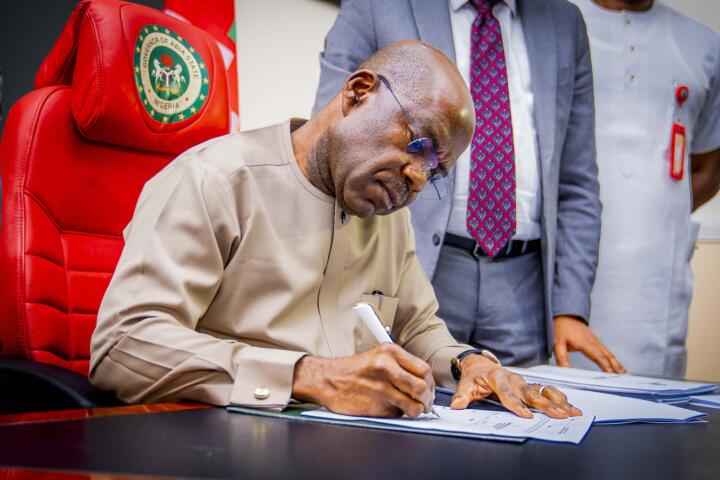
Speaking at the event, Otti described the project as a fulfilment of his administration’s commitment to addressing longstanding infrastructure challenges in the state’s education sector. He noted that improving power supply at the university had been a priority, given its importance to academic activities and campus life.
The governor emphasized that the upgraded power plant would ensure more stable electricity distribution across the institution, reducing reliance on alternative energy sources and creating a more conducive environment for teaching, research, and residential living. He added that the facility is part of a broader plan to strengthen critical infrastructure across Abia State.
Beyond the power project, Otti also commissioned three fully rehabilitated student hostels—Blocks A, B, and C—which had undergone significant upgrades to improve accommodation standards. The renovations are expected to address concerns about overcrowding and deteriorating living conditions previously faced by students.
In addition, the governor performed the foundation-laying ceremony for new hostel projects designed to provide a combined capacity of about 5,000 beds for male and female students. These developments are aimed at easing accommodation shortages and supporting the university’s growing student population.
Further expanding the scope of infrastructure upgrades, Otti flagged off the construction of new buildings for the Faculty of Agriculture and the Faculty of Law, as well as a 1.8-kilometre internal road project within the campus. These projects are expected to enhance academic delivery, improve mobility, and modernise the university’s physical environment.
University authorities and student representatives welcomed the governor’s interventions, describing them as timely and impactful. The Vice Chancellor noted that the projects would significantly improve both academic and residential experiences, while the Students’ Union leadership expressed appreciation for the administration’s focus on student welfare.
Otti reiterated his administration’s long-term vision for the institution, including plans to consolidate university operations within the Uturu campus for better coordination and efficient use of resources. He also revealed that discussions are ongoing to develop a larger, independent power solution that would not only serve the university but also benefit surrounding communities.
According to the governor, the proposed power expansion project could involve a dedicated energy system with a capacity of up to 15 megawatts, with future plans to transition toward renewable energy sources. (Nairametrics)
The commissioning of the upgraded power plant and other projects reflects a broader push by the Abia State government to drive development through targeted investments in education and infrastructure. Officials say such initiatives are crucial to positioning the state as a hub for academic excellence and economic growth.
Observers note that consistent power supply remains a critical challenge for many tertiary institutions in Nigeria, often affecting research output and the quality of education. The intervention at Abia State University is therefore seen as a significant step toward addressing these systemic issues.
As construction work continues on the newly flagged projects, stakeholders are optimistic that the improvements will have a lasting impact on the university’s capacity, attract more students, and enhance its reputation as a leading institution in the region.
The state government has assured that it will continue to prioritise infrastructure development across key sectors, with education remaining a central focus of its agenda.
Support InfoStride News' Credible Journalism: Only credible journalism can guarantee a fair, accountable and transparent society, including democracy and government. It involves a lot of efforts and money. We need your support. Click here to Donate