
Nollywood actor Damola Olatunji has come out to celebrate his senior colleague, Bolaji Amusan a.k.a Mr Latin. Recall that the veteran moviestar recently announced that he has bagged a BSc in Peace and Conflict Resolution from the National Open University of Nigeria, NOUN.
Reacting via his Instagram page to celebrate him, Olatunji simply hailed Mr Latin for proving that true greatness never stops growing.
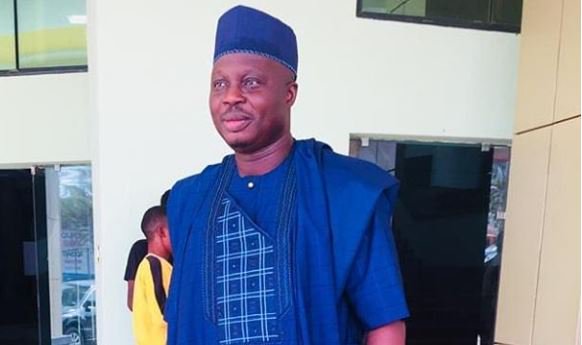
Describing him as an inspiration to the world, he noted that despite his age and everything he has accomplished, Mr Latin’s passion for learning and pursuit of knowledge remain unmatched.
His words, “If you know, you know.
Mr Latin just proved that true greatness never stops growing.
Behind every great leader is an even greater mind, and he embodies that perfectly.
Despite his age and all he has accomplished, his passion for learning and pursuit of knowledge remain unmatched. A true inspiration to those around him, and that, more than anything, is what makes him extraordinary.
It takes a special kind of man to lead with both wisdom and humility.
Congratulations, my President. You continue to make us proud, and the best is still ahead! @mrlatin1510 @tampanglobal”
WOW.
Nollywood is a sobriquet that originally referred to the Nigerian film industry. The origin of the term dates back to the early 2000s, traced to an article in The New York Times. Due to the history of evolving meanings and contexts, there is no clear or agreed-upon definition for the term, which has made it a subject to several controversies.
The origin of the term “Nollywood” remains unclear; Jonathan Haynes traced the earliest usage of the word to a 2002 article by Matt Steinglass in the New York Times, where it was used to describe Nigerian cinema.
Charles Igwe noted that Norimitsu Onishi also used the name in a September 2002 article he wrote for the New York Times. The term continues to be used in the media to refer to the Nigerian film industry, with its definition later assumed to be a portmanteau of the words “Nigeria” and “Hollywood”, the American major film hub.
Film-making in Nigeria is divided largely along regional, and marginally ethnic and religious lines. Thus, there are distinct film industries – each seeking to portray the concern of the particular section and ethnicity it represents. However, there is the English-language film industry which is a melting pot for filmmaking and filmmakers from most of the regional industries.
Support InfoStride News' Credible Journalism: Only credible journalism can guarantee a fair, accountable and transparent society, including democracy and government. It involves a lot of efforts and money. We need your support. Click here to Donate