
Nollywood actress Victoria Inyama has tendered a heartfelt apology to the public over her circumcision comment. Recall that she recently declared her love for female circumcision, recalling how she was circumcised while she was living in the village with her grandmother.
Reacting days later, the moviestar apologized to Nigerians for her comment, stating that she was completely uninformed about what she talked about.
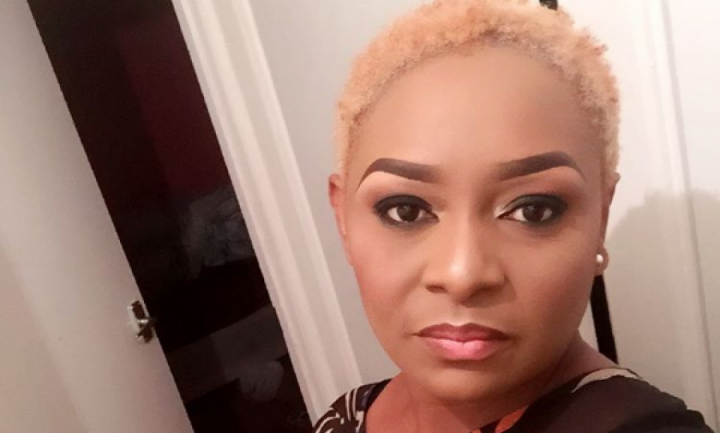
Victoria added that after talking with a midwife, she realised that her experience is nothing like what women go through today.
Her words, “A few weeks ago, on a talk show with Daddy Freeze, we were talking about issues like we always do, and I was just mentioning the root cause of certain issues and what I think or why I think it was done at that time. That’s where the FGM thing came up.
Our ancestors thought that female circumcision would control the urges of women; unfortunately, I didn’t know the gravity of what it is in most places. FGM is bad.
A midwife called me to explain this, and now I understand. It is nothing like what I went through; I never knew they stitched and thought it was just the basics.
Even my prophetess in church, who is like my mother, told me she was in the hospital for a week over her episode, and she was only 15.
For that to have happened to her and to everybody out there, I am sorry if my argument and comment came across as uninformed. Yes, I was totally uninformed about this FGM thing; now I am informed. So, now I am going to do better.”
WOW.
Nollywood is a sobriquet that originally referred to the Nigerian film industry. The origin of the term dates back to the early 2000s, traced to an article in The New York Times. Due to the history of evolving meanings and contexts, there is no clear or agreed-upon definition for the term, which has made it a subject to several controversies.
The origin of the term “Nollywood” remains unclear; Jonathan Haynes traced the earliest usage of the word to a 2002 article by Matt Steinglass in the New York Times, where it was used to describe Nigerian cinema.
Charles Igwe noted that Norimitsu Onishi also used the name in a September 2002 article he wrote for the New York Times. The term continues to be used in the media to refer to the Nigerian film industry, with its definition later assumed to be a portmanteau of the words “Nigeria” and “Hollywood”, the American major film hub.
Film-making in Nigeria is divided largely along regional, and marginally ethnic and religious lines. Thus, there are distinct film industries – each seeking to portray the concern of the particular section and ethnicity it represents. However, there is the English-language film industry which is a melting pot for filmmaking and filmmakers from most of the regional industries.
Support InfoStride News' Credible Journalism: Only credible journalism can guarantee a fair, accountable and transparent society, including democracy and government. It involves a lot of efforts and money. We need your support. Click here to Donate