
Nollywood actor Kunle Remi has opened up about how he sometimes feels the urge to shut out social media. He recently revealed that the internet has been taking an emotional toll on him, and fans have been reacting.
Describing logging into Instagram as exhausting nowadays, Kunle revealed that the constant heartbreaking news, disrespect, toxicity, and negativity have been a lot to take in.
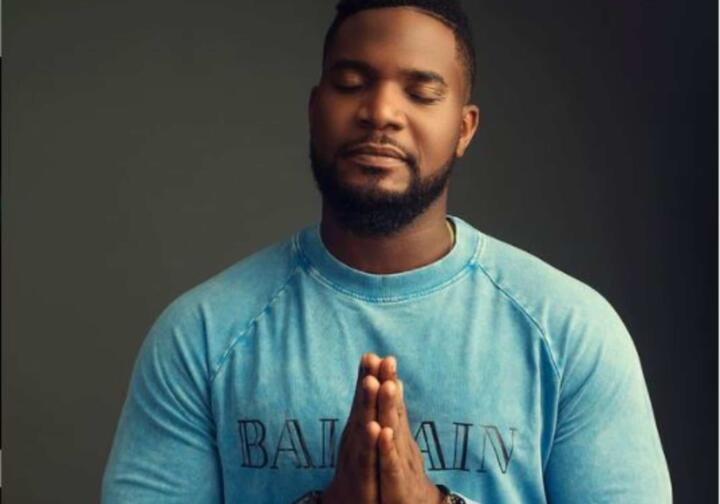
The moviestar, however, added that he can’t quit social media because Nollywood has evolved beyond acting.
His words, “Low key… I’ve felt like shutting out Instagram lately.
It’s exhausting waking up and almost being afraid to log in… afraid of the heartbreaking news, the disrespect, the toxicity, the negativity. It can be draining. But the truth is… I can’t fully log out.
Some people can step away from social media and disappear for a while. But for me, I evolved into more than just an actor. I became a brand, a storyteller, an influencer… a light-bearer in my own way.
And every now and then, I remind myself that I still have humor to share, love to give, stories to tell, and light to shine especially in dark times like these. Honestly, these days you almost have to pray before opening the app.
So maybe this is just a gentle reminder: If all you can do today is shine light… please do. Be kind in this space. Be soft where the world is hard. Be hope where there is noise.
We need it now more than ever. In many ways… it’s our job.”
WOW.
Nollywood is a sobriquet that originally referred to the Nigerian film industry. The origin of the term dates back to the early 2000s, traced to an article in The New York Times. Due to the history of evolving meanings and contexts, there is no clear or agreed-upon definition for the term, which has made it a subject to several controversies.
The origin of the term “Nollywood” remains unclear; Jonathan Haynes traced the earliest usage of the word to a 2002 article by Matt Steinglass in the New York Times, where it was used to describe Nigerian cinema.
Charles Igwe noted that Norimitsu Onishi also used the name in a September 2002 article he wrote for the New York Times. The term continues to be used in the media to refer to the Nigerian film industry, with its definition later assumed to be a portmanteau of the words “Nigeria” and “Hollywood”, the American major film hub.
Film-making in Nigeria is divided largely along regional, and marginally ethnic and religious lines. Thus, there are distinct film industries – each seeking to portray the concern of the particular section and ethnicity it represents. However, there is the English-language film industry which is a melting pot for filmmaking and filmmakers from most of the regional industries.
Support InfoStride News' Credible Journalism: Only credible journalism can guarantee a fair, accountable and transparent society, including democracy and government. It involves a lot of efforts and money. We need your support. Click here to Donate