
Veteran Nollywood filmmaker Tunde Kelani has urged young Nigerian directors to look inward for stories and embrace technology. He recently had his say while speaking at the maiden edition of Directors Guild of Nigeria, DGN Week and Awards 2026 in Lagos, where he was honoured with a Special Recognition Award for his contributions to the Nigerian film industry.
Stressing that Artificial Intelligence is a tool to enhance, not erase, African creativity, Kelani stated that the award will remain precious to him forever.
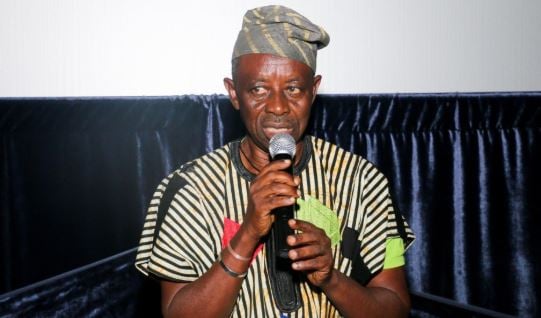
He added that despite being considered an icon in the Nigerian movie industry, he is still making mistakes and learning from them.
His words, “I want to advise our young filmmakers to look back to Africa for their authentic stories and never to be afraid to embrace new technology.
AI is not going to take away your history, your artistry or your languages. It is a tool to enhance your work.
As directors, we don’t only entertain. We are custodians of our history, our languages and traditions.
This award would remain precious to me for the rest of my life. It came at a time when I’m still working, learning and making mistakes.”
Nollywood is a sobriquet that originally referred to the Nigerian film industry. The origin of the term dates back to the early 2000s, traced to an article in The New York Times. Due to the history of evolving meanings and contexts, there is no clear or agreed-upon definition for the term, which has made it a subject to several controversies.
The origin of the term “Nollywood” remains unclear; Jonathan Haynes traced the earliest usage of the word to a 2002 article by Matt Steinglass in the New York Times, where it was used to describe Nigerian cinema.
Charles Igwe noted that Norimitsu Onishi also used the name in a September 2002 article he wrote for the New York Times. The term continues to be used in the media to refer to the Nigerian film industry, with its definition later assumed to be a portmanteau of the words “Nigeria” and “Hollywood”, the American major film hub.
Film-making in Nigeria is divided largely along regional, and marginally ethnic and religious lines. Thus, there are distinct film industries – each seeking to portray the concern of the particular section and ethnicity it represents. However, there is the English-language film industry which is a melting pot for filmmaking and filmmakers from most of the regional industries.
Support InfoStride News' Credible Journalism: Only credible journalism can guarantee a fair, accountable and transparent society, including democracy and government. It involves a lot of efforts and money. We need your support. Click here to Donate