
Former Senator representing Kaduna Central, Shehu Sani, has said Southern Nigeria should retain the presidency for eight years, arguing that the region deserves the same duration of presidential power enjoyed by the North between 2015 and 2023.
Sani made the position known on Wednesday while delivering the inauguration lecture for Osun State Governor, Ademola Adeleke’s second term in office, in Osogbo.
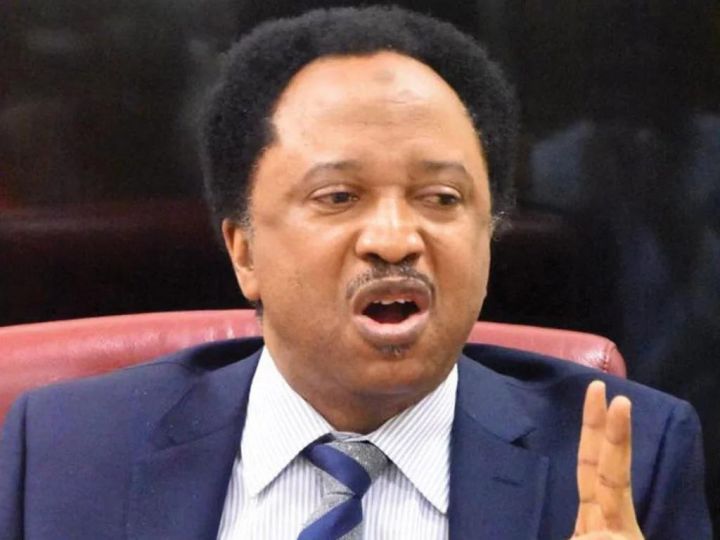
The former lawmaker called on political leaders to respect the principle of power rotation between the North and South, insisting that individual presidential ambitions should not undermine national unity and the relationship between the two regions.
According to him, the North occupied the presidency for eight years under former President Muhammadu Buhari, and fairness demands that the South should also be allowed to complete an equivalent eight-year tenure.
“The political ambitions of individuals should not be allowed to destroy the good relationship, historical ties, shared values and solidarity between the North and the South,” he said.
Sani added: “Like every other part of the country, the South deserves respect for the principle of political power rotation. Power has been held in the North for eight years. It should be allowed, in the spirit of fairness, equity and justice, to be in the South for eight years.”
He clarified that his position was not influenced by his presence in Osun State or his relationship with Governor Adeleke, saying he had consistently advocated rotational presidency in his public engagements.
The former senator warned politicians against allowing personal ambitions to create divisions between the two regions, stressing that their historical connections and shared interests should be protected.
Beyond the debate on power rotation, Sani urged Adeleke to use his second term to strengthen democratic institutions, promote economic transformation and deliver measurable development across Osun State.
Speaking on the theme, “Beyond the Ballot Box: Subnational Governance, Institutional Independence and the Future of Democracy in Nigeria,” he described the governor’s renewed mandate as a social contract that comes with greater expectations and responsibilities.
He urged Adeleke to consolidate the achievements of his first term, address existing shortcomings and establish institutions capable of sustaining development beyond individual administrations.
Sani maintained that winning elections was only one aspect of democratic governance, arguing that strong institutions and effective administration were necessary to translate political mandates into tangible benefits for citizens.
In his response, Adeleke described Sani as a practical politician and intellectual with a strong understanding of Nigerian federalism.
The governor acknowledged the challenges associated with the country’s federal structure, particularly the concentration of powers at the centre.
He, however, expressed optimism that the Tinubu administration was taking steps towards restructuring the federation through constitutional amendments and the devolution of responsibilities to state governments.
Adeleke specifically mentioned proposed changes to the Exclusive Legislative List and efforts towards establishing state police as part of the ongoing restructuring discussions.
The debate over rotational presidency has remained a major issue ahead of the 2027 general elections, with political figures holding different positions on whether the presidency should remain in the South or return to the North after Tinubu’s tenure.
While Sani maintains that the South should complete eight years, the Nigerian Constitution does not expressly provide for a North-South rotational arrangement, leaving the issue largely within the sphere of political agreements and conventions.
Support InfoStride News' Credible Journalism: Only credible journalism can guarantee a fair, accountable and transparent society, including democracy and government. It involves a lot of efforts and money. We need your support. Click here to Donate