
Geneva – Women now hold just 27.5 per cent of national parliamentary seats worldwide, marking the slowest growth in nearly a decade and raising fresh concerns about the pace of progress toward gender equality in political decision-making .
The latest report from the Inter-Parliamentary Union (IPU), released ahead of International Women’s Day, shows a meagre 0.3 percentage point increase from 2025 – matching the previous year’s sluggish rate and representing the weakest annual improvement since 2017 . The stagnation persists despite growing international recognition that diverse leadership strengthens democratic governance and policy outcomes.
The findings come as women’s leadership in parliament has actually declined sharply. The proportion of women Speakers of Parliament has dropped to 19.9 per cent – just 54 Speakers globally – compared with 23.7 per cent a year ago . Of the 75 new Speakers appointed or elected in 2025, only 12 were women .
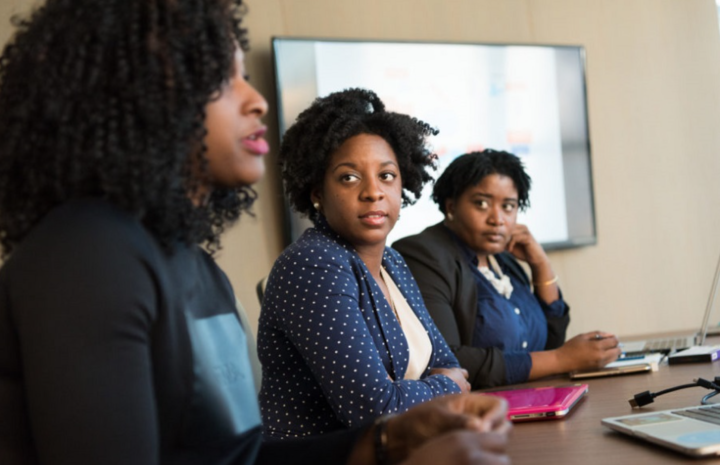
The Americas continue to lead the world in women’s parliamentary representation, with women accounting for 35.6 per cent of all parliamentarians across the region . Four of the seven countries that have achieved gender parity or better in their lower or single chambers are located there: Bolivia joins Cuba, Nicaragua and Mexico in reaching this milestone, alongside Rwanda, Andorra and the United Arab Emirates .
Europe follows with 32.3 per cent representation, while the Middle East and North Africa region remains the lowest performer, where women hold just 16.2 per cent of seats on average . Three countries – Oman, Tuvalu and Yemen – have no women MPs at all in their lower or single chambers .
Some nations recorded significant progress. Kyrgyzstan achieved the greatest improvement among countries holding parliamentary renewals in 2025, with a 12.9 percentage point increase in women’s representation . Saint Vincent and the Grenadines followed closely with a 12.3 percentage point rise .
The report underscores that well-designed and implemented electoral quotas remain the most effective mechanism for boosting women’s representation. Chambers with some form of legislated or voluntary quota elected or appointed an average of 30.9 per cent women in 2025, compared with just 23.3 per cent in chambers without quotas .
Several countries achieved historic results. Australia elected 69 women to its 150-member parliament, securing women their highest-ever share of seats at 46 per cent . Czechia saw women’s representation in its lower chamber rise from 25 to 33 per cent, while Ecuador’s National Assembly reached 45 per cent women – an all-time high .
The IPU described 2025 as “a landmark year for Japan’s political history”, noting the country elected its first woman Prime Minister and achieved a record 29.4 per cent women’s representation in the upper chamber following July elections .
Beyond the numerical stagnation, the report highlights a deeply concerning trend: women parliamentarians face disproportionately high levels of public intimidation and violence, both online and offline .
An IPU study on political violence found that 76 per cent of women parliamentarians surveyed experienced psychological violence, compared with 68 per cent of their male counterparts . The abuse ranges from online harassment and threats to physical intimidation, creating an additional barrier that may discourage women from seeking or remaining in public office .
Valentina Grippo, an Italian MP with the European Delegation to the IPU, highlighted the personal toll: “If you say something that is not perfectly in line with what your audience wants to hear, then you have multiple attacks” .
Some countries have begun taking action. The Colombian Parliament passed legislation to prevent and punish violence against women in politics, while the Philippines Electoral Commission intervened when male candidates made disparaging remarks about their female peers .
In response to the persistent gaps, the IPU adopted a Plan of Action for Gender Parity in Parliaments in October 2025, providing a comprehensive roadmap to achieve 50:50 representation . The plan addresses three dimensions: numerical parity, equal influence and power, and transforming political culture. Recommendations include constitutional guarantees, gender quota legislation aligned with electoral systems, and measures to create gender-sensitive, family-friendly parliamentary workplaces .
“The growing phenomenon of violence and intimidation may discourage some women from running for office, an additional obstacle to progress in women’s political representation,” the IPU cautioned in a statement .
As the world marks International Women’s Day on 8 March, the report serves as a sobering reminder that at the current pace, achieving gender parity in parliaments globally remains decades away – unless concerted action accelerates change. The IPU, founded in 1889 as the first multilateral political organisation, continues to urge its 183 member parliaments to prioritise reforms that open political spaces fully and safely to women .
Support InfoStride News' Credible Journalism: Only credible journalism can guarantee a fair, accountable and transparent society, including democracy and government. It involves a lot of efforts and money. We need your support. Click here to Donate