
Popular content creator and Nollywood actor, Motolani Odobodobo, has opened up about the misconceptions surrounding his skits and online persona. He recently had his say during an interview with Saturday Beats, and fans have been reacting.
Noting that some viewers often blur the line between his characters and his real life, Motolani shared that, contrary to popular opinion, he is not a gigolo in real life.
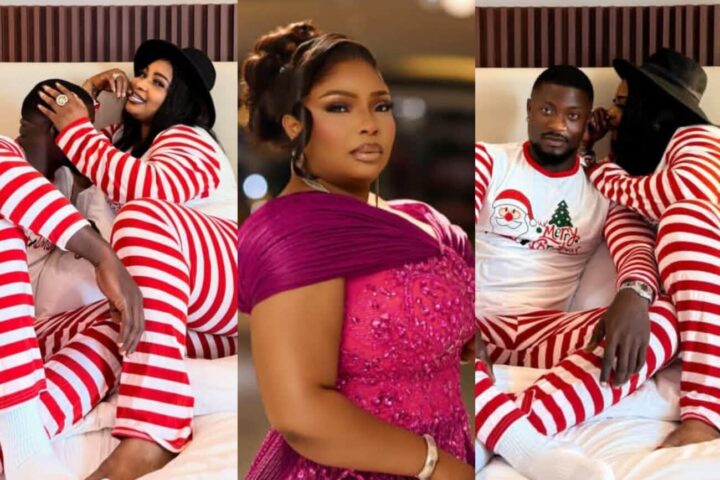
The skitmaker added that despite the false rumours about him, he remains focused on the positive reception his work receives.
His words, “Some people assume the character reflects my real lifestyle.
They think I’m actually a sugar boy in real life. But that’s just part of creating a strong, believable character.
I don’t let it distract me; I focus on the positive feedback, which is much stronger. At the same time,
I understand that not everyone will relate to my style, so I stay true to my brand while still being mindful of my audience.
My inspiration goes way back to my school days. I’ve always loved making people laugh. I was that guy cracking jokes at shows and being naturally dramatic.
Even at home, among my siblings, I am the most dramatic, so it’s always been part of me.
I started off in church drama, but at some point, I felt I needed more freedom to express my creativity. That’s when I moved into street content.
At the time, I didn’t have enough cast members to create skits, so I started doing funny vox pops and interviews because they required fewer people.
After many posts, platforms such as Tunde Ednut, Gossipmill, KraksTV, YabaLeft, and NaijaEverything, as well as actresses like Sotayo Gaga and Regina Chukwu, started reposting my vox pop videos, which gave me visibility.
I’m an actor as well, and I’m a product of Itele D’Icon. I had the opportunity to connect with him through Kemity, which really helped shape my journey.
Right now, I am fully stepping into Nollywood because I want to grow and expand my craft.”
WOW.
Nollywood is a sobriquet that originally referred to the Nigerian film industry. The origin of the term dates back to the early 2000s, traced to an article in The New York Times. Due to the history of evolving meanings and contexts, there is no clear or agreed-upon definition for the term, which has made it a subject to several controversies.
The origin of the term “Nollywood” remains unclear; Jonathan Haynes traced the earliest usage of the word to a 2002 article by Matt Steinglass in the New York Times, where it was used to describe Nigerian cinema.
Charles Igwe noted that Norimitsu Onishi also used the name in a September 2002 article he wrote for the New York Times. The term continues to be used in the media to refer to the Nigerian film industry, with its definition later assumed to be a portmanteau of the words “Nigeria” and “Hollywood”, the American major film hub.
Film-making in Nigeria is divided largely along regional, and marginally ethnic and religious lines. Thus, there are distinct film industries – each seeking to portray the concern of the particular section and ethnicity it represents. However, there is the English-language film industry which is a melting pot for filmmaking and filmmakers from most of the regional industries.
Support InfoStride News' Credible Journalism: Only credible journalism can guarantee a fair, accountable and transparent society, including democracy and government. It involves a lot of efforts and money. We need your support. Click here to Donate