
Veteran Nollywood actress Faithia Williams has accused some cinemas of frustrating the screening of her film “Efunroye: The Unicorn.” She recently had her say via a viral clip, and fans have been reacting.
Lamenting that some Nigerian cinemas are giving her movie late night and mid-day screening times instead of more suitable daytime slots, Faithia shared that the decision is seriously affecting audience turnout.
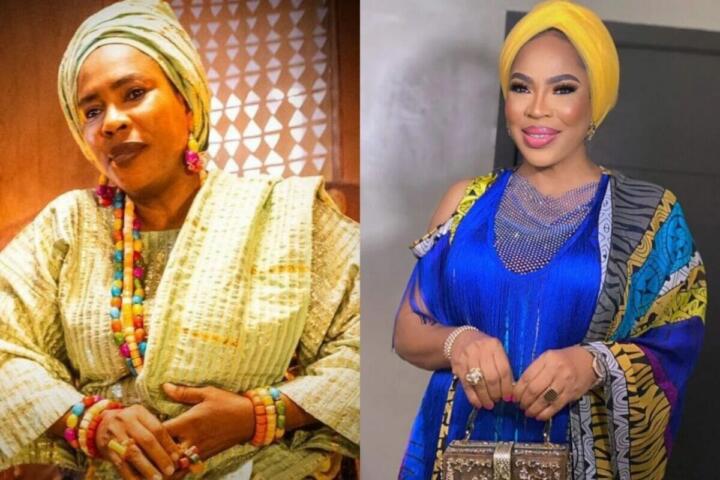
The moviestar added that the situation has also ruined planned cinema appearances by members of the cast.
Her words, “Some cinemas are not even giving me time at all. By the time they give me stupid showtime and I cannot cope, I’ll leave. That’s what they want to do.
I suffered for that movie, I spent a lot on that movie.
I’m heartbroken, and I have never done this before. But because this involves millions of naira, I have to cry out to my fans and ask them to plead on my behalf.
I have been having issues with the showtime for my movie. Cinemas are trying to kill this movie, and I don’t know why. This is the Ileya period when people usually come out to watch movies, yet they are giving me poor showtimes.
I spent a lot of money on this movie. I borrowed money, and investors are involved too. They need to make their money back.
Because my movie is four weeks old, they are giving me terrible showtimes. Some movies just came out, and they want to push mine to the background. They give me showtimes like 12 noon. I don’t know who goes to the cinema by 12 noon. Then they give me 9 p.m. showtimes. I also don’t know who goes out to watch movies that late.”
WOW.
Nollywood is a sobriquet that originally referred to the Nigerian film industry. The origin of the term dates back to the early 2000s, traced to an article in The New York Times. Due to the history of evolving meanings and contexts, there is no clear or agreed-upon definition for the term, which has made it a subject to several controversies.
The origin of the term “Nollywood” remains unclear; Jonathan Haynes traced the earliest usage of the word to a 2002 article by Matt Steinglass in the New York Times, where it was used to describe Nigerian cinema.
Charles Igwe noted that Norimitsu Onishi also used the name in a September 2002 article he wrote for the New York Times. The term continues to be used in the media to refer to the Nigerian film industry, with its definition later assumed to be a portmanteau of the words “Nigeria” and “Hollywood”, the American major film hub.
Film-making in Nigeria is divided largely along regional, and marginally ethnic and religious lines. Thus, there are distinct film industries – each seeking to portray the concern of the particular section and ethnicity it represents. However, there is the English-language film industry which is a melting pot for filmmaking and filmmakers from most of the regional industries.
Support InfoStride News' Credible Journalism: Only credible journalism can guarantee a fair, accountable and transparent society, including democracy and government. It involves a lot of efforts and money. We need your support. Click here to Donate