
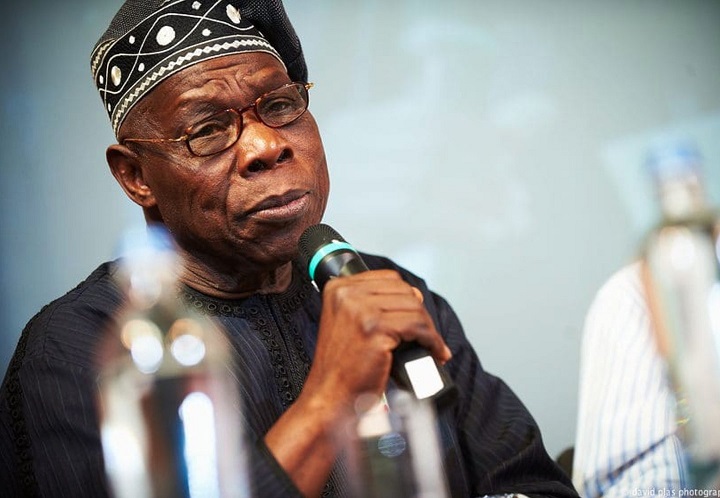
Former President Olusegun Obasanjo has sparked fresh debate over Nigeria’s downstream petroleum sector after stating that the country’s state-owned refineries under the Nigerian National Petroleum Company Limited (NNPC Ltd) may never function effectively again.
Obasanjo made the remarks while reflecting on Nigeria’s long-standing struggle to revive its refining capacity, despite decades of investment and repeated turnaround maintenance efforts. His comments add to ongoing national conversations about energy security, fuel import dependence, and the future of Nigeria’s oil infrastructure.
Nigeria currently operates several state-owned refineries located in Port Harcourt, Warri, and Kaduna. However, these facilities have suffered from years of underperformance, technical inefficiencies, and prolonged shutdowns. As a result, the country continues to rely heavily on imported refined petroleum products to meet domestic demand.
The former president argued that the structural and managerial challenges affecting the refineries are deeply rooted and may not be easily resolved through conventional rehabilitation efforts. He suggested that continued attempts to fix the facilities without fundamental restructuring may not yield sustainable results.
His position has reignited discussions among policymakers, energy experts, and industry stakeholders about whether Nigeria should continue investing in the rehabilitation of existing refineries or fully transition toward private-sector-led refining operations.
The comment comes at a time when the country is witnessing the emergence of large-scale private refining capacity, most notably the Dangote Refinery. The facility, one of the largest in the world, is expected to significantly reduce Nigeria’s dependence on imported fuel and reshape the downstream petroleum market.
Energy analysts note that Nigeria’s refining challenges are not new. Over the years, multiple turnaround maintenance projects have been carried out on government-owned refineries, but these efforts have consistently failed to restore sustained operations. Issues such as inadequate funding, technical inefficiencies, pipeline vandalism, and governance constraints have been repeatedly cited as contributing factors.
The Nigerian National Petroleum Company Limited (NNPC Ltd) has maintained that efforts are ongoing to rehabilitate and modernize the refineries. The company has also explored partnerships and private-sector collaborations aimed at improving operational efficiency and restoring refining capacity.
However, critics argue that repeated rehabilitation attempts have not produced lasting results and that resources may be better directed toward alternative energy strategies or private-sector-led refining initiatives. The debate has become central to Nigeria’s broader energy policy direction.
Nigeria remains one of the largest crude oil producers in Africa, yet it imports a significant portion of its refined petroleum products. This imbalance has long been a source of concern, as it places pressure on foreign exchange reserves and exposes the economy to global price fluctuations.
Experts say that functional domestic refineries would help stabilize fuel prices, reduce import dependence, and improve energy security. However, achieving this goal has proven difficult due to systemic challenges within the downstream sector.
Obasanjo’s remarks also highlight broader governance and policy issues in Nigeria’s oil and gas industry. Questions around transparency, accountability, and efficiency in managing state-owned assets continue to shape public debate.
Industry stakeholders are divided on the issue. While some agree with the former president’s assessment that state-owned refineries may be structurally unviable, others believe that with the right reforms, modern technology, and effective management, the facilities can still be revived.
The emergence of private refining capacity has added a new dimension to the discussion. Projects such as the Dangote Refinery are expected to transform Nigeria’s fuel supply chain and potentially reduce reliance on public refineries over time. This shift could redefine the role of the state in downstream petroleum operations.
The Federal Government has repeatedly emphasized its commitment to reforming the energy sector through policy adjustments, deregulation, and infrastructure development. These reforms are intended to attract investment, improve efficiency, and enhance competitiveness in the sector.
Despite differing opinions, there is broad agreement that Nigeria’s current refining model is unsustainable in its existing form. Whether through rehabilitation, privatization, or structural overhaul, significant changes are required to address long-standing inefficiencies.
Energy economists also point out that global refining trends are evolving, with many countries shifting toward more efficient, large-scale, and privately operated facilities. This global context adds weight to arguments in favor of private-sector dominance in refining operations.
However, concerns remain about affordability, market control, and regulatory oversight if private refiners dominate the sector. Policymakers are therefore tasked with balancing efficiency with consumer protection and energy security.
For now, Obasanjo’s statement has reignited one of Nigeria’s most persistent policy debates: whether state-owned refineries still have a viable future or whether the country must fully embrace a new downstream petroleum structure driven by private investment.
As discussions continue, the performance of ongoing refinery projects and broader sector reforms will likely determine the future direction of Nigeria’s refining industry.
Support InfoStride News' Credible Journalism: Only credible journalism can guarantee a fair, accountable and transparent society, including democracy and government. It involves a lot of efforts and money. We need your support. Click here to Donate