
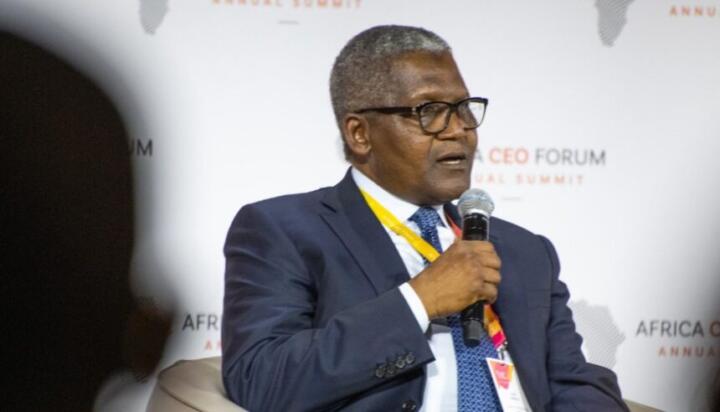
Engineering professionals and industry stakeholders have credited African billionaire Aliko Dangote with playing a significant role in driving what many describe as Africa’s industrial revolution through large-scale investments in manufacturing, infrastructure, and energy development. The recognition reflects the growing influence of industrial projects associated with the Dangote Group across multiple sectors of the African economy.
The commendation came during discussions among engineering and industrial stakeholders who highlighted the impact of major projects spearheaded by the business magnate, particularly in cement production, oil refining, petrochemicals, agriculture, and logistics. According to participants, these investments have contributed to industrial expansion, job creation, and increased local production capacity across the continent.
Aliko Dangote is widely regarded as one of Africa’s most influential industrialists, having built a conglomerate with operations spanning several African countries. His business empire has focused heavily on sectors considered critical to economic development, including cement manufacturing, sugar refining, fertilizer production, and petroleum processing.
Engineering experts argue that large-scale industrial projects require extensive technical expertise, innovation, and infrastructure planning. Facilities developed under the Dangote Group often involve complex engineering systems, large workforce coordination, and advanced industrial technology. Stakeholders say these projects have demonstrated Africa’s growing capacity to execute industrial initiatives at a global scale.
One of the most cited examples is the Dangote Refinery, a massive oil refining and petrochemical facility located in Lagos. The refinery, designed with a capacity of approximately 650,000 barrels per day, is expected to reduce Nigeria’s dependence on imported petroleum products while strengthening domestic energy security. Industry analysts describe the project as one of the largest industrial developments in Africa’s history.
Engineers involved in discussions noted that projects of such scale contribute significantly to technology transfer, skills development, and industrial capacity building. Local engineers, technicians, and contractors participating in these projects gain exposure to advanced industrial processes and international standards, potentially strengthening the continent’s technical workforce.
The cement sector was also highlighted as a major contributor to industrial growth. Through expansion across multiple African countries, Dangote Cement has become one of the continent’s largest cement producers. Increased local cement production has helped reduce reliance on imports while supporting infrastructure and construction development.
Stakeholders emphasized that industrialization remains one of Africa’s biggest economic priorities. Many African economies continue to depend heavily on raw material exports and imports of finished products. Expanding local manufacturing and industrial processing is therefore viewed as essential for creating jobs, improving trade balances, and stimulating economic growth.
The role of infrastructure development was another key issue raised during the discussions. Large industrial operations often require investments in roads, ports, power generation, and logistics networks. These supporting infrastructures can generate broader economic benefits beyond the immediate industrial project itself.
Experts also noted that industrial expansion has the potential to strengthen regional trade within Africa. Increased manufacturing capacity can support exports to neighboring countries, especially under frameworks such as the African Continental Free Trade Area (AfCFTA), which aims to boost intra-African trade and economic integration.
The engineering community further stressed the importance of private sector leadership in driving industrial transformation. Governments across Africa often face budget constraints that limit large-scale infrastructure and industrial investments. Private investors capable of mobilizing substantial capital therefore play a critical role in advancing industrialization efforts.
Employment generation remains another major benefit associated with industrial projects. Manufacturing plants, refineries, and infrastructure developments create both direct and indirect jobs across supply chains. Industry observers say these opportunities are particularly important for Africa’s growing youth population, which requires expanded employment prospects.
However, analysts caution that industrial growth must also be accompanied by sustainable development practices. Environmental management, emissions control, and responsible resource utilization are increasingly important considerations in modern industrial operations. Stakeholders therefore emphasize the need for industries to balance economic growth with environmental sustainability.
The engineering sector also highlighted the importance of policy support in sustaining industrialization. Stable regulations, reliable energy supply, efficient transport systems, and access to financing are considered essential for supporting industrial investments across Africa.
While praising Aliko Dangote for his contributions, experts noted that Africa’s industrial transformation requires broader participation from both public and private sectors. Expanding industrial capacity across the continent will depend on coordinated efforts involving governments, investors, engineers, and financial institutions.
Education and technical training were identified as additional priorities. Industrial growth creates demand for skilled labour in engineering, manufacturing, maintenance, and logistics. Strengthening technical and vocational education systems is therefore considered critical for sustaining long-term industrial development.
Industry stakeholders also pointed to the importance of innovation and technology adoption. Automation, digital manufacturing systems, and advanced engineering processes are increasingly shaping modern industry. African economies seeking to compete globally will need to embrace technological advancements while developing local expertise.
The recognition of Dangote’s role in industrial development also reflects broader optimism about Africa’s economic potential. With abundant natural resources, a growing population, and expanding markets, many experts believe the continent has the capacity to become a major industrial force if structural challenges are effectively addressed.
Challenges such as infrastructure deficits, power shortages, currency instability, and regulatory bottlenecks continue to affect industrial growth in many African countries. Stakeholders argue that overcoming these obstacles will require sustained reforms and long-term investment strategies.
For now, engineering professionals maintain that the scale and ambition of projects linked to Aliko Dangote have helped reshape perceptions about Africa’s industrial capabilities. By demonstrating that large-scale industrial projects can be executed successfully within the continent, they believe such investments are contributing to a broader industrial transformation narrative.
As Africa continues to pursue economic diversification and manufacturing expansion, industrial projects led by both private and public sector actors are expected to remain central to the continent’s development agenda. The engineering community insists that sustained industrialization will be critical for improving productivity, strengthening economies, and enhancing Africa’s position within the global economy.
Support InfoStride News' Credible Journalism: Only credible journalism can guarantee a fair, accountable and transparent society, including democracy and government. It involves a lot of efforts and money. We need your support. Click here to Donate