
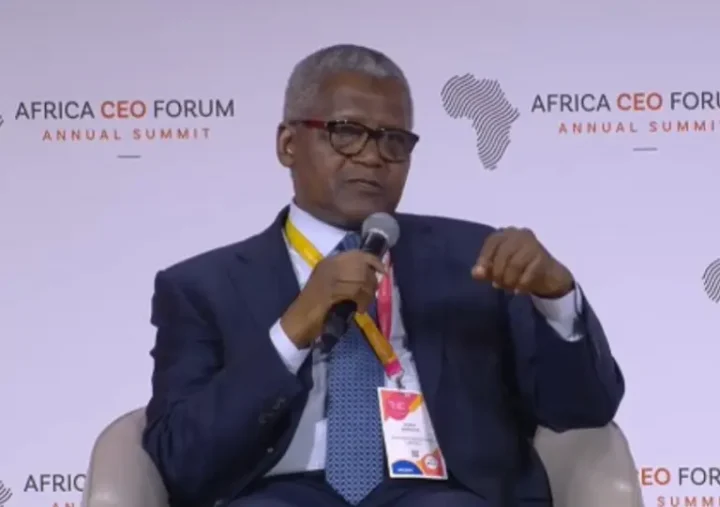
The Dangote Group has reportedly engaged in high-level investment discussions with Norges Bank Investment Management, the manager of Norway’s sovereign wealth fund valued at approximately $1.9 trillion, in a move that could strengthen international investor interest in Nigeria’s industrial and infrastructure sectors.
The discussions are believed to focus on potential investment opportunities, strategic partnerships, and areas of long-term collaboration involving major industrial projects and economic development initiatives across Nigeria and potentially other parts of Africa.
Industry analysts describe the engagement as significant due to the global influence and financial strength of Norway’s sovereign wealth fund, which is regarded as one of the largest investment funds in the world. Managed by Norges Bank Investment Management, the fund invests across global equities, fixed income assets, infrastructure, and real estate markets.
The talks also highlight increasing international attention toward African industrial expansion, infrastructure development, and long-term investment opportunities in emerging markets. Nigeria’s large population, expanding consumer market, and growing industrial base continue to attract strategic investor interest despite economic challenges.
The Dangote Group remains one of Africa’s largest industrial conglomerates, with investments spanning cement production, sugar refining, salt processing, agriculture, petrochemicals, logistics, and energy infrastructure.
Analysts say discussions involving a global sovereign wealth fund and a major African industrial group could potentially signal confidence in Nigeria’s long-term economic prospects and industrialization agenda.
Sovereign wealth funds typically pursue long-term investment strategies focused on stable returns, infrastructure development, and strategic asset diversification. Norway’s sovereign wealth fund, funded primarily through oil revenues, is widely recognized for its global investment footprint and emphasis on sustainable investment principles.
Investment experts note that large institutional investors are increasingly evaluating opportunities in infrastructure, manufacturing, energy, and industrial sectors within emerging economies as they seek portfolio diversification and long-term growth potential.
The Nigerian economy has undergone significant reforms in recent years, including foreign exchange adjustments, fiscal policy reforms, and efforts to improve the investment climate. These reforms have created both opportunities and challenges for businesses and investors operating within the country.
Infrastructure and industrial development remain key priorities for Nigeria as the country seeks to reduce import dependence, expand manufacturing capacity, and improve economic diversification beyond crude oil exports.
The engagement between Dangote Group and Norges Bank Investment Management may therefore align with broader goals of attracting foreign capital into productive sectors capable of supporting economic growth and job creation.
Industry observers believe sectors such as cement, petrochemicals, energy, logistics, and transportation continue to present attractive opportunities for long-term investors due to rising demand across Africa.
The development also reflects growing international recognition of Africa’s infrastructure financing needs. The continent requires substantial investment in transportation networks, power generation, manufacturing facilities, and industrial supply chains to support economic growth and population expansion.
Nigeria’s industrial sector has increasingly focused on local production and value addition as part of efforts to reduce reliance on imports and strengthen domestic manufacturing capacity. Large-scale industrial projects are considered central to this strategy.
The Dangote refinery and petrochemical projects, for instance, have attracted global attention due to their scale and potential impact on energy supply chains within Africa. Such projects are often viewed as strategic infrastructure investments with regional significance.
Analysts note that sovereign wealth funds generally prioritize stable policy environments, strong governance standards, and long-term economic fundamentals before committing major investments. Regulatory consistency and macroeconomic stability therefore remain important factors influencing investor confidence.
The involvement of a globally recognized institutional investor could also improve international perception of Nigeria’s investment environment and potentially encourage additional foreign capital inflows.
Global investment trends increasingly show institutional investors expanding exposure to emerging markets where long-term infrastructure and industrial growth opportunities exist. Africa’s youthful population and rising urbanization continue to make the continent strategically important for future investment planning.
However, experts caution that challenges such as currency volatility, infrastructure gaps, inflationary pressures, and regulatory uncertainties remain concerns for foreign investors evaluating African markets.
The Nigerian government has continued to promote policies aimed at improving ease of doing business, enhancing industrial output, and strengthening investor confidence through economic reforms and public-private partnerships.
Investment collaborations involving large conglomerates and sovereign wealth funds may also support technology transfer, skills development, and broader industrial expansion across the economy.
Financial analysts say partnerships with global institutional investors can provide access to long-term financing that is often necessary for capital-intensive infrastructure and industrial projects.
The discussions between Dangote Group and Norges Bank Investment Management therefore represent more than routine corporate engagement, as they potentially signal deeper international interest in Africa’s evolving industrial landscape.
For now, stakeholders across the investment and business community are expected to closely monitor the outcome of the talks, particularly regarding possible investment commitments, strategic partnerships, and future collaborations capable of influencing Nigeria’s industrial and economic trajectory.
Support InfoStride News' Credible Journalism: Only credible journalism can guarantee a fair, accountable and transparent society, including democracy and government. It involves a lot of efforts and money. We need your support. Click here to Donate